Desktop
Responsible packaging for a responsible future
We Make. We Supply. We Deliver
Mobile/Tablet
Responsible packaging for a responsible future
We Make. We Supply. We Deliver
MENU

Desktop
Responsible packaging for a responsible future
We Make. We Supply. We Deliver

Mobile/Tablet
Responsible packaging for a responsible future
We Make. We Supply. We Deliver
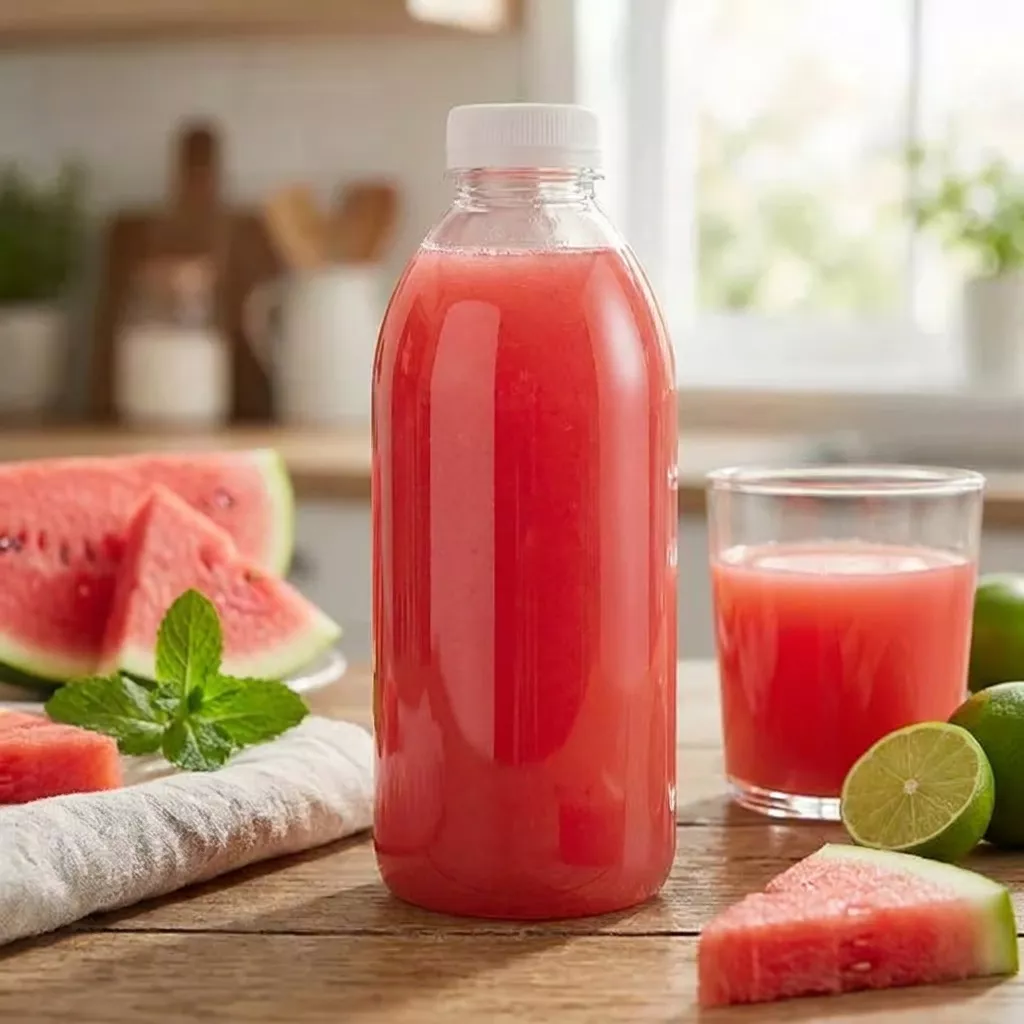
Choosing a juice bottle is not only about how much liquid it holds. The size and shape affect your selling price, fridge space, portion control, branding and how practical the drink is for customers to carry.
A 60ml bottle makes sense for a concentrated wellness shot. A 250ml or 330ml bottle suits a standard grab-and-go juice, while 500ml and 1 litre formats work better for larger servings and sharing.
Choosing the wrong format can leave a premium drink looking undersized, make a value product difficult to price, or take up more chilled display space than expected. You also need to consider the bottle neck, matching cap, filling process and whether your drink will undergo high-pressure processing.
This guide compares the most common juice bottle sizes and explains what to check before ordering bottles for your drinks business.
| Bottle size | Best suited to | Typical positioning |
|---|---|---|
| 60ml | Health shots like turmeric shots and samples | Small, concentrated serve |
| 100ml | Wellness drinks, tonics and mini juices | Premium small format |
| 250ml | Cold-pressed juice and smaller single serves | Everyday grab-and-go |
| 330ml | Juice, smoothies and functional drinks | Standard retail serve |
| 500ml | Larger juices, smoothies and meal replacements | Substantial single serve |
| 1000ml | Sharing bottles, catering and family formats | Multi-serve |
Zeus Food's current range covers 60ml and 100ml shot bottles alongside 250ml, 330ml, 500ml and 1 litre retail formats.
Before comparing shapes or materials, decide how the drink will be sold and consumed.
A customer buying a ginger shot expects a compact bottle that communicates concentration. Someone buying a smoothie as part of their lunch expects a more substantial portion. A farm shop selling juice for the breakfast table may need a larger format that can be poured across several servings.
Think about the role the drink plays:
Once those decisions are clear, the most suitable size becomes easier to identify.
A 60ml bottle is designed for drinks where a small amount is the complete serving, rather than a reduced version of a larger juice.
It works particularly well for:
This format can also make a useful entry point for customers who are not ready to commit to a full-size drink. A juice bar might offer a 60ml sample of a new blend, while a café could position a wellness shot alongside breakfast or lunch orders.
Bottle shape matters even at this size. A tall shot bottle creates a slim, upright appearance, while a squat round bottle feels more compact and sturdy. Zeus Food also stocks a 60ml Frankie Round format, giving businesses another option for wider-neck applications.
A 60ml product should still feel deliberate. Clear labelling, a secure tamper-evident closure and a price that reflects the concentration of the drink will help prevent customers from seeing it simply as a smaller portion.
A 100ml bottle sits between a traditional wellness shot and a standard juice. It gives you more space for the drink and your branding without moving into a full grab-and-go portion.
This size is a good fit for:
The extra capacity can be useful when a 60ml bottle feels too restrictive for the recipe. It also gives labels more room for ingredients, nutritional information and brand messaging.
Zeus Food's 100ml Round Juice Bottle is made from clear PET and uses a 28mm neck. It pairs with the matching 60ml to 100ml tamperproof lid range, which is sold separately.
The 250ml bottle is one of the most versatile formats for a drinks business. It provides a complete single serve without feeling too large, making it suitable for chilled cabinets, meal deals and takeaway counters.
Common uses include:
A 250ml bottle gives customers enough product to feel substantial while helping the business maintain portion and ingredient control. It can also support a lower entry price than a 330ml or 500ml serving.
This size works well for premium juices where ingredients are costly, such as blends containing berries, ginger, turmeric or leafy greens. Rather than compromising the recipe to reach a larger fill, the business can sell a smaller but more concentrated drink.
Zeus Food offers several 250ml formats, including Bobby Round, Bella Square, Frankie Round and Gatsby Round bottles. This means businesses can choose the bottle profile that best suits the drink, filling process and brand.
For many drinks brands, 330ml is the natural middle ground. It is large enough to serve as a complete drink but still compact enough for chilled retail displays, takeaway bags and on-the-go consumption.
It suits:
The 330ml size is familiar to customers because it is widely used across the wider drinks market. That familiarity can make the product easier to understand and compare at the point of sale.
It is also a useful size when building a consistent range. A drinks business can use 60ml bottles for concentrated shots and 330ml bottles for its main juices, giving customers an obvious distinction between product types.
Zeus Food stocks both round and square 330ml formats, including Bobby Round and Bella Square bottles. A 330ml Bella Square option made with 75% recycled PET content is also available.
A 500ml bottle provides a more substantial serving. It is well suited to products intended to replace a snack, accompany a meal or deliver a larger volume of juice or smoothie.
Typical uses include:
This size gives the product a stronger visual presence in the fridge, but it also requires more display space and increases the ingredient cost per unit. The retail price must reflect both the larger fill and the perceived value of the recipe.
A 500ml bottle may not be the right choice for every juice. Rich, concentrated or high-cost blends can become difficult to price at this volume. For lighter juices, smoothies and milk-based products, however, it can provide a satisfying portion.
Zeus Food offers 500ml Bella Square, Bobby Round and Frankie Round formats. The Frankie Round has a wide 38mm neck, which can make filling thicker smoothies and pulpy drinks more practical.
A 1 litre bottle is usually a multi-serve format rather than a drink intended for immediate individual consumption.
It works well for:
The larger bottle can offer better value per millilitre and reduce the number of individual bottles required for catering or group service. It can also help drinks businesses reach customers who want to keep fresh juice at home rather than buy one portion at a time.
Storage and handling are more important at this size. The bottle needs to fit comfortably in commercial and domestic fridges, remain stable when partially full and be easy to pour.
Zeus Food stocks both Bobby Round and Bella Square bottles in 1000ml formats.
Capacity is only part of the decision. Two bottles holding the same amount can behave differently in storage, display and branding.
Round bottles provide a familiar drinks format and are comfortable to hold. They work across retail, food service, events and delivery.
A continuous curved surface can suit simple wraparound labels and clean branding. Round bottles also tend to feel familiar to customers, which can help a new product communicate its purpose quickly.
Zeus Food's Bobby Round range is available in 250ml, 330ml, 500ml and 1000ml sizes. The Frankie Round family includes 60ml, 250ml and 500ml formats, with a wide 38mm neck intended to make thicker drinks easier to fill.
Square bottles can create a more distinctive shelf presence. Their flatter faces give labels a defined presentation area and can make bold branding easier to display.
They may also use chilled shelf space efficiently when lined up in rows, although businesses should test the exact bottle dimensions against their refrigerators and display units before committing to large quantities.
Zeus Food’s Bella Square range is available in 250ml, 330ml, 500ml and 1000ml sizes.
Neither shape is automatically better. Choose based on the product, filling setup, branding and how the bottle will be stored.
Zeus Food’s standard juice bottles are made from clear PET, with an rPET option available in part of the range.
PET is lightweight, impact-resistant and offers glass-like clarity. This lets the colour and texture of the drink remain visible without the weight and breakage risk associated with glass. The bottles are designed for chilled drinks and can be recycled where suitable collection facilities exist.
rPET contains recycled PET material. It offers businesses a way to include recycled content in their packaging while retaining the familiar properties of a clear plastic juice bottle. The exact recycled content should always be checked on the individual product page rather than assumed across the full range.
At the time of writing, Zeus Food offers a 330ml Bella Square bottle made with 75% rPET.
High-pressure processing, commonly shortened to HPP, is used by many cold-pressed juice producers to extend shelf life without traditional heat pasteurisation.
Zeus Food describes its PET and rPET juice bottle range as HPP compatible. The bottles are engineered to withstand high-pressure processing and cold filling when used with the correct closure.
HPP suitability should still be tested as part of your own production process. The result can depend on the bottle, cap, fill level, drink formulation, equipment and processing cycle.
Do not place a large production order based only on bottle capacity. Confirm the exact bottle and closure combination with your filling or HPP provider, then carry out production testing before launch.
Bottle caps and lids are generally sold separately. This allows businesses to choose a closure that matches the bottle neck, application and preferred colour.
Zeus Food's standard 250ml, 330ml, 500ml and 1000ml retail bottles use a 38mm neck finish and can be paired with matching 38mm tamper-evident lids. Smaller 60ml and 100ml bottles may use different neck sizes, so their individual specifications should be checked before ordering.
A tamper-evident cap includes a security band that separates when the bottle is opened for the first time. This gives the customer visible confirmation that the closure has been broken.
Before ordering, check:
Do not assume that a cap will fit simply because the bottle capacities are similar.
Branding is particularly important for juices because customers can already see much of the product through the bottle. The label or print needs to work with the colour of the drink rather than fight against it.
Zeus Food offers two main custom branding routes across its bottle range.
Applied labels give you greater freedom with colours, photography, gradients and detailed artwork. They also provide room for ingredients, nutritional information, barcodes and storage instructions.
The bottles can be supplied with the labels already applied, reducing the amount of handling required before filling or distribution.
Direct printing places the design onto the bottle itself. Zeus Food's current direct-print option uses one-colour artwork.
This can create a clean, minimal appearance and allow more of the drink to remain visible. It may suit brands with a simple logo or a design system that does not rely on detailed full-colour artwork.
Your choice should be based on the artwork, required information, production volume and desired finish. Ask for a proof and review it using the actual drink colour where possible.
The best bottle is the one that works throughout the full journey, not simply the one that looks best when empty.
Start with the serving size and target selling price. Then test how the filled bottle looks in your fridge, feels in the hand and fits inside delivery packaging.
Check the practical details before committing to a large order:
A sample run can expose problems that are difficult to spot from product specifications alone.
Many drinks businesses do not need to choose a single size.
A structured range might use:
The key is to give each size a clear role. Too many similar options can make buying, filling and stock control more complicated without giving customers a meaningful choice.
Start with the fewest formats needed to cover the range. Additional sizes can be introduced once demand is proven.
There is no single standard size, but 250ml and 330ml are common choices for individual grab-and-go juices. A 60ml or 100ml bottle is better suited to wellness shots, while 500ml and 1 litre bottles work for larger or multi-serve drinks.
A 250ml bottle can provide a complete individual serving, particularly for concentrated or premium cold-pressed juice. It can also help control ingredient costs and support a lower selling price than larger formats.
Yes. A 330ml bottle offers a familiar retail portion and enough capacity for a substantial drink without taking up as much space as a 500ml format.
A 330ml bottle suits lighter smoothies and meal-deal products. A 500ml bottle is generally more appropriate for thicker, more filling blends. A wider-neck bottle can also simplify the filling of pulpy or viscous drinks.
A 60ml bottle is the most direct choice for ginger shots and other concentrated wellness drinks. A 100ml bottle works when the recipe requires a larger serving or more dilution.
They are normally sold separately, allowing the correct cap type and colour to be selected. Always check the bottle’s neck specification and add the matching closure to the order.
The Zeus Food PET and rPET juice bottle range is recyclable where appropriate collection and processing facilities exist. Bottles should be emptied before disposal, and local recycling guidance should be checked.
Yes. Zeus Food offers full-colour applied labels and one-colour direct bottle printing across its custom bottle range.
The right bottle should protect the drink, fit your operation and make the finished product easy for customers to understand.
For concentrated shots, start with 60ml or 100ml. For everyday grab-and-go juice, compare 250ml and 330ml formats. Choose 500ml for larger smoothies and substantial servings, or move to 1 litre when the product is designed for sharing, catering or home use.
Zeus Food supplies round and square PET juice bottles from 60ml to 1000ml, alongside matching tamper-evident closures and custom branding options. Browse the range, compare the specifications and test your chosen bottle and cap combination before moving into full production.